Pages

Showing posts with label Poetry. Show all posts

Sunday, March 3, 2013

I Know What I Saw

So, as part of the new me always to be in progress, I'm going to get back to doing this blog regularly. That means eventually I'm going to have to clean up the about me section and clearing out the broken links to books that no longer exist. But, let me start with Belfire Press' anthology I Know What I Saw. This started out as a co-editing project between me and Barry Napier. Of course, when things got chaotic with my mortgage thing, I had to withdraw -- he was doing all the work, and I didn't want to be be unfair by taking the credit when he did the heavy lifting.  Still, I have a poem in here riffing on T.S. Eliot's "The Love Song of J. Alfred Prufock." (I took the line about mermaids and made into space aliens)


Saturday, August 27, 2011

Needfire, and ... Um, Whatever Happened To That Pound Chapbook?

For the foreseeable near-term future, Needfire Poetry will be going on hiatus at Belfire Press. This is something that Jodi Lee and have talked about, and we both agree that it's for the the best. To put it frankly, my personal life is a mess right now. It has been for years. However, the problems have accrued like this: my mother's failing health was always a distraction, but there was something a little bit more afoot.

I have a mortgage, and my wife and I got that mortgage at the peak of the housing bubble, when everybody was telling us to "Buy, buy, buy!" Problem is, I was a full-time-for-part-time-pay college adjunct back then. The thought was: after only a few more years of adjunct hell, I could finally land a full time position at least at a community college. That never happened, and out of financial need, I went to Walmart in late 2008. The housing bubble burst ... and now my wife and I have been constantly fighting off foreclosure, especially since our mortgage was sold by our lender to a predatory group of douchebags. So, now it's 2011, and the mortgage nightmare has never gone away. Which leads to one other place: online freelancing. I spend a lot of time doing it, partly because there is just so much debt that I have amassed, and I am constant need for cash just to keep creditors from coming after my wife and I. Actually, 90% of my freetime behind a computer is spent trying to squeeze nickels and dimes from the internet.

And so, that dovetails into The Ezra Pound/Ghost Chapbook that has seemingly taken years to put together. Forget about the circumstances/drama with the original publisher. The chapbook was then going to be published through Needfire, but the bad economy necessitated cutting it from the line up. Then, I was going to create a digital ebook/print chapbook imprint for Needfire, but after the ongoing financial problems I'm having, that seemed like a very bad idea. So, that leads me to right now. The book is clossally late. I still wish to do it, and I'm still going to try very hard to, soon, once the dust settles a little at work.

But, that also brings me back to Needfire going on hiatus. Jodi and I both agree that it should and will be revived at some point. However, it will be once everything is sorted out, and I can come back to running a imprint when I can devote much more time to it without freaking out about how up the air everything regarding my home is. Until then, my personal time will likely be spent either writing my own material or finishing off prior obligations like Pound.

Also, there's this UFO poetry anthology that I promised Barry Napier I'd help him with. Just in case anybody's curious, that book is his baby. He's the lead, and I'm just sort of an assistant -- we haven't really talked at length, but I think I'm helping with the slush. There may be some skullcracking -- ahem, I mean editing -- going on there, too. So, it doesn't really conflict with the reasons why Needfire is going on hiatus. But, more on UFO book a little later.

Sunday, July 10, 2011

David Lynch and Cinematic Poetry

Back when I used to edit poetry often, there was a stock line I often used with writers, as I tried to help whip work into shape: Stop writing like a prose novelist and start speaking through a language of imagery. It's an old truth, basically. If you approach poetry as if you're trying to write a short story, the result will more than likely always be prosaic and wordy. To further illustrate this concept, I would often say something else like Novels are like Martin Scorcese films, and poetry closely resembles the work of David Lynch.

A lot of people do not necessarily understand Lynch, and that's because they are approaching his movies the same way they would a Scorcese or Ron Howard production: expecting a linear narrative to neatly tie things together. One often sees the same with novels, unless you're reading something deliberately post modern or avant garde.

Still, Lynch is fundamentally a poet working in a cinematic medium. Much of contemporary free verse -- even the non-experimental stuff, speaks through a series of images and metaphors. It's the "show, don't tell" aspect on steroids. A contemporary poem stretches down the page on how it lays out it's images within a sequence. Lynch practically does the same in movies. Consider this very short film he did as part of the Lumeire project:


The meaning of the clip is not readily put together the same way Scorcese or Howard would lay something out. Many experience this same sense of confusion through reading poetry, too, especially with work that tends to be more surreal than naturalistic, like, say Garcia Lorca or Pablo Neruda. But then again, Lorca or Neruda are not Hemingway, and nor should the reading experience be expected to be the same, either.

Friday, July 8, 2011

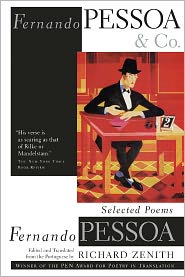
Fernando Pessoa Before The Age of Alts


Fernando Pessoa has the rare distinction of being several notable people within a national literature. He wrote in Portuguese, and if you discount Brazil as, well, Brazil and not Portugal, he collectively stands along side Luis de Camões as one of the greatest poets -- or in this case, group of poets -- Portugal has produced

Simply put, Pessoa wrote under a number of assumed names. Each of those names and surrounding body of work has not only a garnered their own reputation, but each "poet" has their own identity in not only subject matter, but in poetic form. The genius of this, though, is that he took pains to even differentiate how each of his aliases used language.

Still, there's one rather mundane way Pessoa was ahead of his time. Each of his created poets also interacted with each other, through "letters" and other public written means. In short, this must have looked like an act of creative schizophrenia when he was alive. Presently, this sort of thing is more common than what one might think. Look at any messageboard with trolls. Sometimes, people have a tendency to create alts for a variety of reasons, but usually to gin up a flame war and controversy, as a way of demanding attention to some sort of book promotion. In my experience, this typically happens at high trafficked places, and in horror, that would be the Shocklines message forum. Then again, I haven't seen it happen in a year or two, but I haven't been hanging around message boards all that often, as of late.

So while Pessoa's poetry wasn't necessarily post modern, the splintering of identity in the poet himself was actually well ahead of its time.

Saturday, July 2, 2011

Poetry and eReaders, Part II


Last year, I wrote four long poems that were collected into a chapbook called Four Murders.* At the time, I was very interested in how eReaders and cell phones displayed poetry and constantly mucked up a poet's deliberate lineation. The screens, I posited, were too small and the poet had no control over the way they can be displayed.

Turns out, the lineation problem is an easy fix, if you take tablet computers like the Galaxy, iPad, or Xoom into mind. If the reading screen cannot cannot accommodate the lines as they are written, you can just tilt the tablet into a landscape view -- more often then not, that fixes the problem. So, what I once thought was a terrible problem can actually be fixed easily. This does not hold true, however, for most dedicated eReaders (as in: not a tablet).

*It was once limited availability through KHP Publishing. Now, since KHP has gotten rid of its webstore, Jerrod/SD Hintz/Karen Koehler decided to up it Kindle for 0.99$.

Friday, June 24, 2011

How To Edit Poetry

It seems like only other people's blogs or message boards move me to write about poetry these days. This is something I posted on a message board frequented by both writers and editors:

There are several ways to edit poetry correctly, and it depends on the form that is being used. Metrical verse requires different set of gloves because the syllabic nature of the line, plus modern metrical poetry use of "substitutions." Plus, it also changes with the type of “form” that has been written. You wouldn’t edit a sonnet the same way you would a villanelle or sestina. Free verse is rather different construction altogether. However, lets just run with that, since it’s most of what people write these days.

The biggest misnomer about Free Verse is that is formless and anything goes. That is far from the truth. However, when you are confronted with editing free verse, there are a couple of fundamental things to look for.

1. Wordiness. How can the poem be edited or rephrased for more economical uses of language. This is roughly the same when you're editing fiction and non-fiction prose. Consider:

The sun is a bleeding in the sky.

vs.

The sun bleeds in the sky.

Both are saying the same thing, but the second option is more concise. Since poetry is a language medium, you do have to consider the sonic qualities at work. The second option is a valid edit because it keeps the sibilant "s" sounds as the first.

2. Noun and verb choice. Even if you're a sprawling poet like Allen Ginsberg or Walt Whitman, poetry is still mode of writing where language is highly compressed. If you're looking at free verse poetry document, pay special attention word choice. "Sprint" as opposed to "run." And so forth. The key to descriptive writing in poetry and prose usually comes down to good nouns and verbs.

3. Look for adverbs and adjectives to cut. Unlike marketing writing and "why buy" language" adverbs and adjectives stand out as "extra-fluffy" in poetry. You can largely red line most of it out, while going back to trying to strengthen nouns and verbs.

4. Make punctuation and grammar consistent. Creative uses of grammar are frowned upon by nearly every poetry editor I know or have worked with. Look beyond the line and how lines fit together as grammatically correct sentences. This is considered the norm in poetry editing. However, there are notable exceptions out there. Usually, it consists of pulling out the punctuation completely. Some poets, influenced by Asian formalism, sometimes will only use a dash, or a comma -- whatever it is they're doing, it has to be consistent. In most cases, an eye to normal grammar will suffice.

5. Discourage the poet away from the little first person "i." Poetry editors HATE that and reject it with relish. EE Cummings could get away with it, but not every body is EE Cummings.

6. Try to help the poet either write better metaphors or find a way to cut them out completely. The most common of these are anything that compares sometime to the moon or flowers. It's so overdone, they've become poetic cliches. And, they've been poetic cliches for such a long time, Shakespeare even made fun of them in Romeo and Juliet. Writing metaphors can be tricky prospect. Anything that sounds silly on a first read is usually a bad sign.

7. Look for ways to make the imagery as vivid and concrete as possible. Free Verse, thanks to poets like William Carlos Williams, is often a way of writing by using the language of imagery. As mentioned earlier, imagery is always best rendered through specific nouns and verbs, not adjectives.

Thursday, May 26, 2011

Paul Park -- Ragnarok


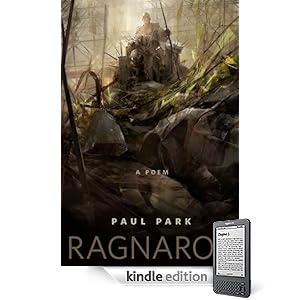
Paul Park's Ragnarok sets off conficted feelings in me as a reader. It's a poem Tor.com published online, and it's available on Kindle as a $0.99 read. As a lover of science fiction, horror, and fantasy, I feel that I should be grateful whenever an established writer makes a serious attempt at writing poetry. As a lover of poetry, the poem itself does not leave me impressed. It leaves me wholly unsatisfied.

Ragnarok is a meant as a post apocalyptic tale told in heroic verse. By heroic verse, Paul Park is not using metrical verse found in Homer, but more of the alliterative type seen in the Old English version of Beowulf (See the Heaney translation)and the sagas of the vikings.

Paul Park has a facility with language. That's the one thing I did enjoy about Ragnarok. He takes alliteration and uses it masterfully as an organizing poetic principal. For example:


There was a man, Magnus’s son,
Ragni his name. In Reykjavik
Stands his office, six stories,
Far from the harbor in the fat past.

That's just the inter-lineal alliteration. Paul Park also works his sonic groupings in such a way that sounds from one line also work with the line that came before. All of this is very well done.

So, what's my problem? It's not with the story, but it's largely a case of poetical aesthetics. I get what park is trying to do here. He's trying to juxtapose a post-apocalyptic time with the "heroic" dark ages. However, it doesn't work -- or, it doesn't work for me, at least.

It goes beyond the use of alliteration as an organizational principal. Park even mimics the modifiers used: "Far from the harbor in the fat past." Present-day idioms seem mismatched to me with this type of versifying. So, as poetry, this sounds far from contemporary. In a way, it makes the whole poem read rather stiff and stilted. As a result, the language seems contrived, not natural.

And this is a shame. Park clearly has the ability to work with language on a poetic level. His use of line organization demonstrates that -- the lines seem like, UM, lines ... not prosaic sentences arbitrarily chopped into lines, which, unfortunately, is a rather common problem in "science fiction" poetry.

Friday, April 22, 2011

Mahmoud Darwish -- Who Am I Without Exile?

So, what is read even less than contemporary Asian poetry in traslation? Contemporary Arabic poetry in translation. With that in mind, the late, great Palestinian poet Mahmoud Darwish...

Thursday, April 21, 2011

Yang Lian & Miyazawa Kenji


every tree beats against you
like a poem's wounded tributary


The phenomenon called "I"
is a blue illumination


Both of these poets remind me of something sad and slightly depressing, when it comes to poetry. America is a country where the cultural value of poetry, collectively speaking, is very low. Foreign poetry in translation is valued even lower. If we follow the race to the bottom of the ignored arts, then Asian poetry in translation is even lower than that of contemporary Europeans.

This might sound erroneous to some. After all, a reader can visit Barnes and Noble and see a variety of haiku anthologies in translation. If a reader is lucky, they can find a New Directions volume of Li Po or Tu Fu. Plus, an apt student of prosody would point out how classical Asian verse fueled the great American modernists like Pound and Williams. Still, there is relatively little or no attention paid to Chinese or Japanese language poetry from Twentieth Century going forward.

Both Kenji and Lian are great reminders that Modernism/Post-Modernism were not just American and European phenomenons.

Tuesday, April 19, 2011

The Most Horrific Poem Ever Written

Paul Celan's "Todesfuge" as read by Galway Kinnell. Not my favored translation, but I would never tell Kinnell that ...


Wednesday, April 13, 2011

Horror Poetry: Why The Hell Would You Want to Write That Shit???

While at Walmart, I started writing many things that I just never finished, due to be tired all the time and then being distracted by my mom's ongoing health situation. At one point, I was seriously thinking of writing a book about the use of the macabre in poetry -- a how-to writing book. I'm not sure if I'll ever get back to it. However, here are the first couple of pages....

Simply because you want to—that should be a good enough reason by itself. Poetry allows a certain level of creative freedom fiction cannot afford. A poem does not have to live and die by narrative rules, and you do not need to follow the rhetorical strategies found within an essay. Of course, you can employ both, but a successful poem can create its own system and rules, so long as one iron clad commandment is met: it has to work, successfully, on the page, and claiming that it needs to be read out loud is a cop-out, just like hiding behind “but it’s how I feel” is the mark of an amatuer. This is why good poetry can run from ancient alliterative narrative, like in Beowulf to Shakespeare’s rhyming pentameter and more post-modernist work, like what one would find in Charles Olson’s body of work. No one system of prosody is superior to another, especially if you take the different shapes and forms as different types of tools to be used. No self-respecting carpenter would ever suggest that every job can be completed with only a hammer. This is why no serious student of poetry should ever dismiss fragmentation over rhyme, or language abstraction in favor of metrical lines. Sure, some poets, like Marilynn Hacker have spent a career writing formal verse, while more experimental poets like Ron Silliman have spent their time pushing the boundries of language. This is not an argument against specializing in a certain type of poetry. Just like a carpenter would never do every job with a hammer, a very skilled cabinet maker wouldn’t take issue with somebody who spends most of their time working with a lathe. Craft is craft. And a craftsman can recognize solid workmanship, even if it is outside their day-to-day relationship with their own favored set of tools. In short, the vague sense of “what is poetry” can open a whole new universe of writing possibilities.

That freedom, however, comes at a very high price. You will not make money. If you want to make a living writing, try writing novels or non-fiction books. Zombies and how-to essays sell. Poetry does not. In fact, writing poetry will likely cost you money. Pay-to-enter book contests are common, and a lot of journals still do not take email submissions. You will not be compensated very well for your work, and in many cases, you will only be paid in contributor copies. So, enter into this proposition carefully, with your eyes open. Most of all, you should know one other truth: while most of society does not take contemporary poetry seriously, poetry labeled as “horror” or “speculative” will be taken even less seriously. Pursuing a career as a poet is to actively consign yourself to obscurity. So, the question comes again: why the hell would you want to write this shit?

Simply because you want to—that should be a good enough reason by itself. Plus, there is no rule disqualifying poets from writing fiction, or essayists from dabbling in playwriting. When it comes down to it, writing is writing. Craft is craft. Yet, before wading into poetry for the first time, there are a few myths you should get out of your head.

1. Poetry is about emotion, and I have feelings!

Um. No. Journaling has positive therapeutic value. If you are writing for a personal sense of catharsis, good for you. However, keep it to yourself. Decorum changes quickly, once you seek to place that work in front of a reader. Writing a poem complaining of a broken heart may elicit a pat on the head from a loved one, but a potential editor or reader really doesn’t care how you came to terms with your mother’s cancer, or how you got over being dumped in your freshman year in college. Editors and readers don’t care about you; they care about the words on the page. If the quality of writing is not there, then they will stop reading halfway through. If you are writing because you are in need of therapy, then seek a therapist, not a poetry editor. This is not to say “confessional” poetry is all bad. Many poets have successfully written about their personal lives, but their facility and creativity with language keeps their work from being purely navel-gazing drivel.

2. Post-Modernists Have Killed Poetry.

Crock of shit. Pure and simple. People who make this claim usually do not widely read poetry. Metrical poetry is alive and well, and it is still being written and published. There is a theory that politics swings like a pendulum, back and forth, left to right. The history of poetry has done the same. The ascendency of free verse was met with profound skepticism. Then, it became the prevailing norm. During the Reagan years, the formalists pushed back, hard. Then, other poets pushed back against the formalists. Then, a journal like Fence comes along, claiming to try and straddle the line between the two. Yes, there are l=a=n=g=u=a=g=e and oilipo poets out there, doing crazy things with the English language. At the same time, formal and metrical poets are still doing their thing to. Both are not going away anytime soon.

3. Academics Have Killed Poetry

Also a crock of shit. However, there is something important to keep in mind, here. If you are going to spend most of your time writing poems, and not hammering out the zombie or vampire novel mass market paperback houses want to consider, then you will have to find a day job. Many poets are also English teachers, both in high school and in college.

Because poetry doesn’t sell as well as zombie or vampire fiction currently does, there are not a lot of major presses into publishing it. In fact, beyond some of the large New York City poetry publishers like Graywolf, Ecco, or Pengiun, a bulk of poetry is published by college and university presses. The reason is quite simply one of finances. University presses are often run by faculty and poorly paid graduate students. The university itself often helps with funding. It helps minimize the loss poetry can accrue.

Also, most importantly, see point #2. English teachers and college professors are not pointy-headed avant gardists; they are also not conservative minded formalists either. College English departments are filled with a vast array of different types of poets and teachers. Visit an English Department sometime, and you will say a vast array of political and aesthetic disagreements taking place.

4. There is No Such Thing as “Horror” or “Speculative” Poetry

“Genre” sometimes is just a word that describes content or subject matter. It doesn’t describe the over all aesthetic, shape, or form of the writing itself. Dracula, House of Leaves, and The Shining are all considered horror novels, but they are all profoundly different in how they are written. Yusef Komunyaakaa, Langston Hughes, and Reginald Shepard are/were a considered “African-American poets,” but none of those writers are alike either. Go through every genre label you will find on book flaps, from Feminist Poetry onwards, and you will find the same thing.

Horror is only a word describing subject matter. The claim that there is no such thing as “horror poetry” is asinine at best, as it turns to blind eye to literary history. Christopher Marlowe wrote “Dr. Faustus” in verse. Shakespeare wrote “Titus Andronicus,” a play full of rape, dismemberment, and cannibalism, in verse as well. I have yet to find one happy, non-tragic, non-mortified poem about the halochaust, disease, or any the darker aspects of humanity. Death is often the subject of poetry as much as love is.

Sure, you will not see a lot of good poems about zombies or vampires, but in terms of pop culture, those are relatively recent imaginative constructions. It’s largely untapped territory for metaphor. Give it time, and it will come. Many who argue against the mere thought of “horror” poetry argue also that there is a lot of really crappy poetry floating around the internet. This is nothing new.

Theodore Sturgeon once noted that “"Ninety percent of everything is crap." Science fiction, itself as an intellectual institution, should not held accountable for the countless trees slaughtered in the name of silly robots or swaggering starship captains. Shitty writing exists, and it will continue to exist as long as human beings pick up pens or furiously pound on keyboards. But, you cannot hold imaginative territory and metaphoric possibilities accountable for the sins of talentless writers. “Horror” will exist as long as human beings feel dread, fear death, have incomprehensible nightmares, and commit terrible crimes against each other. The Old Testament and other works of scripture were first set down thousands of years ago. Utopia has never come, and it likely never will. Unstanding humanity also requires understanding inhumanity.

Writing “horror” is another way of engaging in life. So what if there is a lot of crap out there? I would wager writers like Harlan Ellison or Phillip K. Dick or Kurt Vonnegut never stopped, looked at all the poorly written space opera, and said, “You know what? Not today, there’s too much garbage being published as science fiction. So, I’m going to write about sexually repressed teens at a boarding school. That will earn me respect.” So, it all comes back to one mantra.

Why horror? Why write poetry? Simply because you want to— that should be a good enough reason by itself.

Friday, April 8, 2011

Juxtapositions


My brother has all of the artistic ability in my family, which makes me jealous. I wish I could draw. However, I have been trying to teach myself how to design book covers. Because of SEO and content mills, finding a good tutorial online is a little hard. (Sometimes, it's like finding good articles about writing: a lot of "you can do it!" fuzzy-wuzzy feel-good bullshit, but nothing telling you the actual nuts and bolts).

So, I have been relying on my training as in poetry to guide me. That may sound like fuzzy-wuzzy feel-good bullshit, but there's an actual point there. People who have extensive training in how to write contemporary prose are fo
cused more on writing sentences and paragraphs. People who have extensive training with poetry tend to think in terms of constructing resonant, striking and original concrete imagery. Two things often used in writing poetry are juxtapostion and parataxis. Simply, putting two images together and letting each other resonate off of each other. This is often seen in the "real" prosody and construction of haiku and other asian forms. So, with that in mind... here was a crack at a chapbook cover that will likely not be used. The idea was something that could go through a photocopier and be used for a side stapled pamphlet.


Thursday, April 7, 2011

Prime Directive for 2.99


A poem this long has to be broad and deep, and Prime Directive is both, examining fatherhood and son-hood and their avatars-creation and destruction-in many ways, but most powerfully through the astigmatic and revelatory American lens of Star Trek. It’s also a page-turner, a rare virtue in poetry.” - Joe Haldeman, author of The Forever War

Saturday, April 2, 2011

2 By Mina Loy

Mina Loy was of the same period as Ezra Pound and William Carlos Williams. The years have not been kind to her, as she is largely forgotten and is only a footnote now in poetic modernism. Still, she deserves a place by both Pound and Williams, as well as T.S. Eliot, as one the greatest American poets of the early twentieth century.


Friday, April 1, 2011

Prime Directive by Bryan Dietrich


Bryan Dietrich is unique in the great expanse of the American poetry, as his work straddles a line seemingly no other poet has be able to walk. He revels in genre culture as a man who truly loves it, but he can also see through the eyes of an academic. As the result, he plays with genre tropes with a greater eye towards contemporary culture. Yet, he is also a skilled poet with an eye towards language. Simply put, he is the best poet science fiction, fantasy or horror has to offer. It is for this reason that I am extremely proud and happy I could help bring out his book length poem, Prime Directive. Sure, I may think it's awesome, but you don't have to take my word for it. Here's the legendary Joe Haldeman:
A poem this long has to be broad and deep, and Prime Directive is both, examining fatherhood and son-hood and their avatars-creation and destruction-in many ways, but most powerfully through the astigmatic and revelatory American lens of Star Trek. It’s also a page-turner, a rare virtue in poetry.” - Joe Haldeman, author of The Forever War

Thursday, March 31, 2011

Olson

Avant garde, post-modernist poetry can be either brilliant, unintelligible crap, or pretentious slop. Unfortunately, most of it is pretentious slop ... but then again, most poetry written is pretentious slop, to take Theordore Sturgeon's law into a new age. However, questions of poetry always comes down to one rule: message is irrelevant--first and foremost, it is always about the sound of the language. It's true for a great work if trochaic meter, like Poe's "The Raven," or something as sprawling as the work of Charles Olson: